Search

Showing posts with label trade mark opposition. Show all posts

Monday, 2 May 2011

Unlike a Virgin: it's an open-and-shut Casey

... but not like
a CARBON VIRGIN?
Always anxious about how the small guys cope in battles against the big guys which, in his opinion, should never be fought, the IPKat was delighted to see the recent ruling in Virgin Enterprises Ltd v Casey [2011] EWHC 1036 (Ch), a ruling of Mr Justice Norris in the Chancery Division, England and Wales, on what the Kat has long considered the totally unmeritorious opposition lodged by Virgin Enterprises to an innocent and non-threatening trade mark application by a small business.

In short, Michael Casey applied to register the word mark CARBON VIRGIN in May 2008 for "advertising; electronic data storage; advertising services provided via the internet; production of television and radio advertisements; accountancy; auctioneering; trade fairs; opinion polling; data processing" in Class 35.  Virgin Enterprises opposed the registration, asserting that (i) the mark was identical to its own registered mark VIRGIN which was registered for similar services, (ii) the mark was similar to its marks VIRGIN and VIRGIN GREEN FUND and its 'Virgin' signature mark which were registered for similar services and that there was a likelihood of confusion; (iii) the mark was identical or similar to 13 specific marks registered by Virgin Enterprises which had a reputation of which Casey's mark took unfair advantage and (iv) the term VIRGIN and the 'Virgin' signature were earlier unregistered rights which entitled Virgin Enterprises to block Casey's registration.

The hearing officer rejected all the grounds of opposition and Virgin Enterprises appealed. While it accepted the hearing officer's findings and holdings in respect of grounds (i) and (iv), it argued that the hearing officer had blundered in grounds (ii) and (iii), making no fewer than six errors of law:

(i) the hearing officer had treated the mark VIRGIN as being capable of only one conceptual meaning when used alone, and of having that meaning irrespective of context;

(ii) the hearing officer had determined the conceptual meaning of the marks without reference to the services for which they were registered;

(iii) the hearing officer should not have treated conceptual similarity as being the determinative factor when comparing the marks -- or should at least have explained why he did so;

(iv) the hearing officer, concluding that there was no likelihood of direct confusion, appeared to say that there could only be direct confusion where the marks were identical;

(v) the hearing officer's approach to the level of conceptual similarity was inappropriate within the context of the unfair advantage opposition;

(vi) the hearing officer had misapprehended the nature of the link in that, in the case of unfair advantage, the consumer had to make an economic link to the owner of the earlier mark, whereas the true link that had to be made was by calling the earlier mark to mind.

Norris J dismissed Virgin's appeal. In his view:
  • When comparing the parties' marks, the hearing officer had chosen the Virgin Enterprise mark closest to Casey's mark and, having referred to a whole range of materials, agreed that there was a reasonable level of visual and aural similarity. However, in respect of conceptual similarity, the hearing officer found that the word VIRGIN had had a subtly different meaning in each mark, resulting in different concepts being created in the mind of the average consumer looking at the respective marks as a whole. That analysis did not betray any error of principle, and a finding that essentially different concepts had been involved was one which was open (and indeed proper) on the evidence.

  • The second ground of appeal had nothing to do with the services to which the mark related and was no more than a re-running of the first ground of appeal.

  • Virgin Enterprises' submissions on the third ground of appeal were wrong, since the hearing officer had not actually treated conceptual similarity as the determinative criterion -- he hadn't regarded any factor as determinative. The weight to be given to each of the many factors relevant to his decision was pre-eminently a matter for him and could not be challenged on appeal.

  •  The hearing officer did not not say that there could only be direct confusion where the marks were identical: he was expressly considering marks which were not identical and, deciding that the differences between the two was sufficiently great that there was no likelihood of confusion, he had adopted the correct legal approach.

  • As for the link, whether it existed between the two marks had to be assessed globally, taking into account all relevant factors and applying the principles of interdependence. This is a classic multi-factorial evaluation undertaken by a specialist tribunal, which an appellate court had to respect. In this case the hearing officer had not made any error in deciding whether 'the necessary link' had been established: he had not thought that the link had been to the proprietor (and not to the mark), and he had not thought that the link had to be economic. Further, based on the evidence before him, he was perfectly entitled to find that the necessary 'link' had not been proved: there being no link, there was no need to investigate the question whether Casey's mark would obtain any unfair advantage.
The IPKat is delighted with this outcome, but saddened that Michael Casey should have been put to so much hardship and stress in his encounter with a giant company with a penchant for IP litigation. Naturally Virgin Enterprises is entitled to expect no lower level of IP protection than any other business -- but it doesn't own the word 'virgin' outright and it can expect others to use it in ways which neither confuse the public nor damage their own equity in the goodwill of their brands.

Like a Virgin here

Monday, 7 June 2010

Coexistence and the Omega saga

Although reckoned by some to be a scholar, the IPKat has always had problems remembering which party is which in cases in which the warring faction have the same name. The Chancery Division (England and Wales) decision at the end of last month from Mr Justice Arnold in Omega Engineering Inc v Omega SA and others [2010] EWHC 1211 (Ch) was always going to be a tough job for him.

Right: nice watch, but it stopped in 1983 ...

This was an appeal by Omega the watchmaker against a hearing officer's dismissal of its opposition to an application by Omega the engineering company to register the trade mark OMEGA in relation to "instruments and apparatus intended for a scientific or industrial application in measuring, signalling, checking, displaying or recording heat or temperature and having provision to display the time of day" in Class 14. In 2007 the engineers applied to register the trade mark; the watchmaker objected on a number of relative grounds, pleading earlier registered and unregistered rights in the word Omega for identical and similar goods and claiming, where appropriate, a likelihood of confusion.

The engineers weren't too pleased with this, saying that the watchmaker had no right to oppose the application since it promised not to do so under the terms of a co-existence agreement between the parties way back in 1983. In clause 5 of that agreement, the watchmaker undertook not to object to the engineers' use or registration in the United Kingdom of certain "excluded goods". These goods were actually listed in clause 3 of the same agreement, the wording of which being identical to the specification of the goods listed in the engineers' application. According to the engineers, since the watchmaker had consented to the registration of the trade mark it was precluded by the Trade Marks Act 1994, s.5(5): "Nothing ... prevents the registration of a trade mark [on relative grounds] where the proprietor of the earlier trade mark or other earlier right consents to the registration".

The hearing officer held that consent was a bar to opposition on relative grounds by virtue of s.5(5) and that, on its true construction, the co-existence agreement amounted to consent to registration of the excluded goods in any appropriate class. However, the watchmaker was unhappy with this and appealed. In its view the agreement, if it applied to anything at all, only barred it from opposing an application in respect of goods in Class 9, but not Class 14. Further, the decision of the Court of First Instance of the European Communities in Case T-90/05 Omega SA v Office for Harmonisation in the Internal Market [2007] ECR II-145 (noted here by the IPKat) meant that such an agreement was irrelevant to an objection made on relative grounds. In any event, the hearing officer considered that s.5(5) had been impliedly repealed, since the Secretary of State had exercised his powers to provide that a trade mark could be refused registration on relative grounds even where consent had been given, where the proprietor of the earlier trade mark raised an objection in opposition proceedings. In response, the engineers not only defended the appeal but issued proceedings for breach of contract and sought summary judgment.

Mr Justice Arnold, giving summary judgment in favour of the engineers, dismissed the watchmaker's appeal. In his view
* The hearing officer had correctly decided that "excluded goods" meant the goods as listed in clause 3 of the agreement, regardless of their class.

* However, while the Court of First Instance in Case T-90/05 said that a co-existence agreement was irrelevant to the assessment of the likelihood of confusion, this was not so. The Court's reason for saying this was not set out, but one possible reason was suggested that the agreement was not a "fact". This was not so: the existence of an agreement between the parties was a very palpable fact.

* The fact that a co-existence agreement was a private right did not mean that it was irrelevant, since an opponent could invoke a private right as a relative ground of objection under Article 8 of the Community Trade Mark Regulation, and Article 52(3) of the same Regulation explicitly stated that a coexistence agreement was relevant to an application for a declaration of invalidity.

* It would there be unjust if a party who consented to the registration of a trade mark could successfully oppose the application to register it.

* It was unsatisfactory to say that an applicant could apply to a competent national court for an injunction to restrain an opponent from opposing -- even assuming that there was a competent national court which had both subject matter and personal jurisdiction.

* Section 5(5) was not repealed, was not inconsistent with subsequent legislation and was in harmony with the Trade Mark Directive itself.
Says the IPKat, this decision gives clear support for the validity of coexistence agreements as a means by which businesses can sort out their own business arrangements unfettered by the bureaucratic inconveniences of an opposition system that's really designed for parties that don't have pre-existing agreements with one another.

Omega 1 here
Omega 2 here
Omega 3 here
Another reason why the IPKat likes this decision here

Friday, 6 March 2009

Darkness visible at the IPO


The IPKat dabbled with the occult by reading the decision of Mr Hobbs QC, sitting as Appointed Person in the opposition concerning DARKNESS VISIBLE.

One Mr Ross Heaven applied to register DARKNESS VISIBLE for ‘Arranging and conducting workshops’ and ‘Spiritual and lifestyle counselling’ in January 2006. This was opposed by a Simon Buxton, who argued that he had an earlier right protected by passing off dating back to January 2003.

Heaven and Buxton had collaborated, providing workshops and writing a book entitled Darkness Visible, but this collaboration had come to an end by the end of 2005. The key theme was the spiritual effects of living in total darkness for a period of time. However, both claimed that they had come up with the concept first and had invited the other to join him.

Mr Buxton explained that he had been introduced to the use of darkness during his induction into a ‘small, private shamanic group of bee-keepers known as The Path of Pollen’ by a process introduced to his as ‘darkness visible’. He described that

‘I was myself Apis Mellifera, a male drone, surrounded by forty thousand female workers and, somewhere, our queen, our regent. …I was no longer human, but a member of a completely different genus’ and ‘The Bee Master eventually placed me in what appeared to be an oversized, six-sided dog basket…’

Buxton published his experiences in a book which featured an effusive introduction by Heaven, but by the time of the hearing he claimed that he had ghost-written the book and that ‘it was conceived and written as a work of fiction and that the ‘path of pollen’ does not exist’..

Heaven also provided witness statements from those who had been on his 2001/2 workshops, stating that the techniques described in Buxton’s book had been used by Heaven in those pre-2003 workshops. Buxton produced his own witnesses, and there both sides tried to discredit each other’s witnesses (including, it seems, with the use of black magic altars).

One of the witnesses claimed that her original statement had been forged, and was produced to support Heaven without her knowledge. Another witness refuted this claimined that the two statements had been signed together in a pub in Arundel, and that she had lent the other witness her pen. Mr Hobbs QC noted that the two statements were signed in different coloured inks.

The Hearing Officer found that this was a case of shared goodwill, and that the oppositon would have to be rejected because both Heaven and Buxton were just as entitled as each other to register the mark.

Mr Hobbs QC found that the Hearing Officer had erred as he had adopted a ‘selelctive approach’ to the evidence that did not have the breadth and depth required for the case. A structured approach to assessment was necessary, and this revealed that Mr Buxton’s organisation was entitled to claim the mark because of the use of it made in commerce since January 2003. Heaven’s claim to proprietorship was open to doubt, particularly in the light of his claim that he had been part of an elaborate hoax regarding The Path of Pollen. Also, in oral submissions he had made it clear that he had no documentary evidence of his earlier use of the term.

Mr Hobbs QC criticised Heaven for burdening the proceedings with unnecessary evidence and Buxton for ‘using the proceedings as a vehicle for unimpressive evidence about his self-proclaimed initiation into the so-called Path of Pollen’.

As for the supposedly false witness statement, the Appointed Person noted that he could made a reference to the Director of Public Prosecutions but didn’t becaused he did not think ‘the public interest requires more public resources to be devoted to the further unmasking of bad behaviour in the context of what has plainly been an over-emotional dispute that ran out of control.’

The IPKat can’t help but think that the whole thing was rather a waste of time. The amount of time and effort in assembling the evidence must have far outweighed the value of the mark. As for using the proceedings as a vehicle to publicise the Path of Pollen, the IPKat can think of few less receptive audiences that a roomful of IP lawyers.

Wednesday, 23 July 2008

eSure v Direct Line - the end of the line for brand experts?


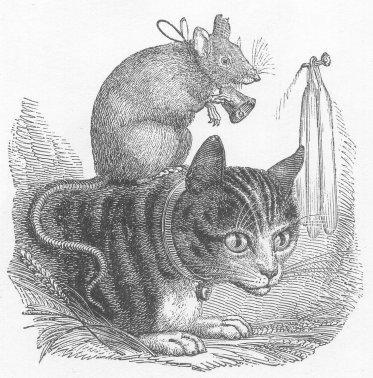
Today the Court of Appeal delivered its judgment in eSure's application for permission to appeal against Lindsay J's decision to uphold Direct Line's opposition against its application to register a mouse on wheels. The opposition was based on a likelihood of (a) confusion and (b) unfair advantage/dilution of Direct Line's red telephone on wheels. Both marks related to insurance services.

The IPKat offers his services as an expert in all cases involving a mouse

eSure in particular questioned Lindsay J's reliance on expert evidence in establishing confusion, and also questioned his using different standards for similarity of marks for establishing confusion and dilution.

Arden LJ delivered the leading judgment, granting permission to appeal, but dismissing the appeal:

  • Lindsay J had erred. There is no threshold level of similarity between marks required under Art.5(1)(b), nor did Vedial say that there was one.Instead, it is the case that if there is no similarity at all then there can be no likelihood of confusion to be considered. However, the finding didn't affect the outcome of the case because the judge had found that the minimum threshold had been met and so she didn't make a final finding on this issue.
  • The judge had upheld the Hearing Officer's finding on similarity of marks for the purposes of s.5(3), but had overruled the Hearing Officer's finding on the same issue under s.5(2). This, eSure argued, was inconsistent. eSure further argued that the way to resolve this inconsistency was to reject the expert evidence under both subsections and so find in eSure's favour on both issues. Not so, found Arden LJ. Another way was to restore the Hearing Officer's finding under s.5(2). Contrary to Lindsay J's finding, the Hearing Officer had been entitled to reach his conclusion that there was indirect confusion (and therefore that the opposition succeeded under s.5(2)) based on his own judgment, and in the absence of additional evidence. The ECJ has left it for national courts to determine how they assess if allegations of similarity or confusion are proved. The approach in the UK is to treat what the average consumer would make of the marks and the link between them as a jury question. In the absence of a jury, it is for the judge to not only put himself in the place of an average consumer, but also to consider whether he, as a potential buyer, would have been confused. Although the relevant cases on this (e.g. GE Trade Mark) predated harmonisation, the principles were derived from the law of evidence, and so could still apply today.
  • Since the judge had been wrong to interfere with the hearing officer's decision, the hearing officer's finding that there was a likelihood of confusion was restored and so the opposition would succeed on s.5(2). Consequently, there was no need to examine the grounds of appeal under s.5(3).
  • Her Ladyship concluded with two general observations: (1) she questioned the role of expert evidence in such cases (Lindsay J had relied heavily on the evidence of a branding expert) . In particular, it would be wasteful for an expert to be called on issues where a tribunal is in a position to form its own view, and the unnecessary calling of experts could have an impact on costs; (2) she spoke strongly in favour of the practice instigated by the late Pumfrey LJ of requiring the parties to seek directions as to the scope of methodology of any consumer survey at the case management stage.

Jacob and Maurice Kay LJJ also gave concurring judgments. Both placed particular emphasis on the fact that there was absolutely no need for a branding expert to be called to give evidence on questions which could easily be settled by the judge. Jacob LJ questioned whether the expert was in fact an expert on confusion between trade marks (as opposed to on branding) and on whether it was evidence at all, or merely assertion. Maurice Kay LJ also called for the Trade Marks Registry to exclude such evidence from its hearings.

Jacob LJ also noted that this was a case which 'suffered greatly from over elaboration in both evidence and argument' where things have become complicated unnecessarily.

The IPKat reckons their Lordships are sounding a little grumpy. He reckons that he would too. Perhaps it's the Kat's imagination, but trade mark cases do seem to have been growing increasingly long over the past couple of years or so. The Kat finds this a tad surprising since, on confusion at least, the ECJ's case law in relatively clear (subject to the odd bit of fuzziness round the edges). Perhaps part of the problem is reliance on evidence that ultimately ends up not being of that much use to the court. This is expensive for the both the parties and the court system, and hopefully this judgment will curb the tendency.

One the subject on experts, the IPKat notes that the Court of Appeal particularly directed its comments on expert evidence to experts produced to testify on confusion issues. He notes that Lindsay J at first instance relied heavily on the expert's evidence in relation to s.5(3). He hopes that the same principle will apply - experts may be experts in branding, but they're unlikely to be experts in the legal question of what constitute detriment or unfair advantage.

Monday, 28 April 2008

Mc's Back; the day is ended

Not so McSweet

King5 reports that McDonalds is opposing a US application to register McSweet as a trade mark for pickled garnishes such as onions. The application is in the name of one
Jim McCaslin, who bought the business from a man named Leo McIntyre. McCaslin has said that McDonalds has indicated that it will allow him to use the name, as long as he drops the trade mark registration.

The IPKat can see why McDonald's might want to stop people taking advantage of its brand, but he's not convinced that going after a man called Mac, who bought his business from a man called Mac is the way to go, particularly in the light of the burger chain's reputation for seeking to "monopolise" the Mac prefix.

World IP Day

It was World Intellectual Property Day over the weekend, but since it was on a Saturday, the IPKat missed it. The IPKat reckons that if the annual IP fest is to be taken seriously, there should be some way to move it to the working week if it falls at the weekend.


The IPKat (right) missed the party

Sunday, 27 April 2008

The Sabatiers cross swords over knife marks

The exotic named case of Rousselon Freres et Cie v Horwood Homewares Ltd [2008] EWHC 881 (Ch), which you can read here on BAILII, was a decision of Mr Justice Warren in the Chancery Division of the High Court for England and Wales.

Rousselon applied to invalidate two UK trade marks belonging to Horwood, claiming that there was a likelihood of confusion between Horwood's later marks (right) and three of its own earlier UK trade marks (two of which are shown below, the third being the word mark SABATIER). The bones of contention were mainly goods in Class 8, which included knives, and the word 'Sabatier' -- apparently a surname. The application also covered domestic utensils in Class 21.


In opposition proceedings before the Registry, the hearing officer said, at para.68:
"The words JUDGE and STELLAR do not "hang together" with SABATIER to make a meaningful whole, and even less so when presented in the logo form in which they have been registered. To my mind the positioning and difference in the style of font used and the "star" curve around the "S" suggests that SABATIER is a separate element. As far as I am aware, the words JUDGE and STELLAR are not descriptive of the goods, and by their relative positioning and size are the dominant, distinctive element. The corresponding graphical representations (judge's head and star) serve to emphasize the words but also contribute to the overall visual impact. However, these elements do not overwhelm SABATIER. The question is as put by Geoffrey Hobbs QC in his decision sitting as the Appointed Person in Raleigh International Trade Mark, [2001] RPC 202 is whether the later mark "captures the distinctiveness of the opponents' mark".
Rousselon appealed, arguing (among other things) that the hearing officer had erred in principle in holding that there was no likelihood of confusion, having essentially accepted that the word 'Sabatier' retained an independent distinctive role in Horwood's trade marks.

Warren J allowed the appeal. In his view

* "the actual test ... remains whether, because of similarity of marks, there is a likelihood of confusion. ... It does not say that a composite mark which contains an earlier mark will always carry a likelihood of confusion; rather, it says that there is such likelihood if the earlier mark has an independent distinctive role. However, the assessment whether the earlier mark does have such a role is ... something which has to be decided before answering the question whether there is a likelihood of confusion. To elide the question of an independent distinctive role with the question of the likelihood of confusion runs the risk of answering the former question by first providing an answer to the latter. That would be to answer the question "Is there a likelihood of confusion" with the answer "Yes, if there is a likelihood of confusion" when the answer should be "Yes, if the earlier mark retains an independent distinctive role".

* in this case, the word 'Sabatier' retained an independent distinctive role in Horwood's trade marks. Although the hearing officer had not stated that as a conclusion, it was, in the circumstances, a conclusion which he must have considered to be correct. Accordingly, it was not possible to maintain that there was no likelihood of confusion between Rousselon's 'Sabatier' mark and Horwood's marks;

* this being so, the hearing officer had erred in principle. His error was a significant one which vitiated the basis on which he had formed the view which he had. The court would substitute its own decision to the effect that the applications made under s 47(2) of the Act succeeded so far as the registration in respect of class 8 was concerned.

The IPKat, who remained confused by the marks right through the judgment and hopes he's got them the right way round in this note, laments the over-intellectualisation of the test of likelihood of confusion of composite marks in the wake of the ECJ's decision in Case C-120/04 Medion v Thomson Multimedia (noted by the IPKat here). This judgment ran to over 100 paragraphs and requires a good deal of effort to follow. No wonder hearing officers run into trouble. Merpel says, but how will consumers know whether they are likely to be confused or not if they don't have a lawyer to tell them?

Thursday, 3 April 2008

Fake footballers' signatures; kikoi returns

Trade marks send pair to jail

The IPKat learns from the BBC that Graeme Walker and Faisal Madani, who respectively sold and supplied fake football memorabilia, have received custodial sentences for fraudulent trading, breaches of the Trade Descriptions Act and infringement of the criminal provisions of the Trade Marks Act. The pair sold fake autographs of sporting personalities including Sir Alex Ferguson, Cristiano Ronaldo, Roy Keane, Steven Gerrard and Jonny Wilkinson. However, Walker was cleared of the headline-maker: selling a signed photograph of Michael Owen.

The IPKat was curious as to what the relevant trade marks actually are. A quick look at the Trade Marks Register suggests in the names in plain script, rather than the signatures themselves. The Kat wonders whether the footballers could have got their signatures registered. Would they have been memorable enough for consumers to use them to distinguish?


KIKOY applicant skirts the issue

Readers with good medium term memories may remember an application filed to protect KIKOY as a UK trade mark noted on the IPKat just over a year ago. This was controversial because it is the phonetic equivalent of ‘kikoi’, a form of Kenyan fabric used for skirts. The Daily Nation reports that the application has failed. However, none of the exciting trade mark issues (phonetic equivalent of a descriptive word, the morality of ‘locking out’ the tranditional users from marketing goods under the name in the UK) got an airing. Instead, the application was thrown out because the applicant failed to file a TM8.

The IPKat wonders if the applicant saw the outcry and thought better of it.

Followers