Search

Showing posts with label Freedom of expression. Show all posts

Sunday, 15 May 2011

Louis Vuitton vs. Nadja Plesner: Court lifts ex parte injunction against the artist

The IPKat has reported briefly on the latest verdict in the dispute between Louis Vuitton and the artist Nadja Plesner over the incorporation of a Community design-protected pattern owned by Louis Vuitton into a painting inspired by Picasso's Guernica, titled "Darfurnica" (see IPKat post here for a comparison of Darfurnica to Guernica; picture on the right shows the offending detail). I believe the decision by the District Court of the Hague of 4 May 2011 merits a post on its own.

As far as the procedural history is concerned, on 28 January 2011, the District Court of the Hague issued an ex parte injunction against Nadja Plesner and her gallery prohibiting the defendants from "further infringement of Vuitton's registered design". It appears the court took particular offense with the fact that the gallery used the detail of the starving kid with the L.V. handbag as a cardboard cut-out and "eye-catcher" at the entrance of the gallery (see image below).

After hearing Plesner's arguments, the District Court of the Hague has, with judgment dated 4 May 2011, lifted the ex parte injunction against Plesner (Dutch judgmenent here; English translation courtesy of Kennedy Van der Laan, acting for Plesner, here).

The court basically held that Plesner's right of artistic freedom of expression trumped Vuitton's exclusive rights in the Community design (para. 4.8). The average viewer of Darfurnica would not infer that Louis Vuitton was actually involved in the conflict in Darfur, but understand the symbolic nature of the use of the well-known "L.V." pattern, which stands for luxury. Owners of well-known brands had to accept critical use to a higher degree than others (referring to European Court of Human Rights, 15 February 2005, NJ 2006, 39, Steel and Morris vs. UK, para. 94, known as the "McLibel" case). Use as an "eye catcher" did not make a lawful expression of artistic freedom unlawful (para. 4.9). It did, however, certainly generate a lot of publicity for Plesner since Louis Vuitton was provoked into suing, and public opinion largely sided with Plesner.

While Plesner states on her website that she is glad "it's over", this Kat assumes that Louis Vuitton could proceed with proceedings on the merits, but may wisely choose not to.

Thursday, 5 May 2011

Artists in court: a snapshot of current developments in Europe

In "Iconic IP and freedom of expression: the battle lies ahead", the IPKat reported on the tussle between the famous fashion accessory house Louis Vuitton and Dutch artist Nadia Plesner over the incorporation by the latter of a Community design-protected pattern owned by the former into Darfurnica -- her dramatic and symbol-encrusted nod to Picasso's Guernica. LV sued for infringement of its design right; Plesner counterclaimed for a declaration that she was entitled to assert her right of freedom of expression under Article 10 of the European Convention on Human Rights.

Having succeeded in obtaining injunctive relief and token damages in France, LV initially obtained injunctive relief in the Netherlands too (for the litigation background see Rosie Burbidge's post on Art & Artifice here). The IPKat has now learned that, earlier this week, The Hague District Court reversed its own earlier order and has now decided that Plesner's right of free speech is fundamental and trumps LV's entitlement to assert its design right. Those of you who are fluent in Dutch can read the decision here. The Kats are awaiting an English translation, which they believe will come through their Kat-flap before the end of the week.


An emotive fixture in Europe's modern art heritage is the Berlin Wall, which like Guernica communicates a profound statement of man's cruelty to his fellow man.  Now a tourist attraction for many folk who were born too recently to remember those who were slain in a vain attempt to cross it, the Wall is still capable of engendering controversy.  In "Berlin Wall artists sue city in copyright controversy", Guardian Online, 3 May (spotted by too many readers to thank by name), reports that
"The East Side Gallery is one of Berlin's most popular tourist attractions, a 1.3km-long brightly painted stretch of the wall which divided east and west for almost 30 years. But now the outdoor exhibition space is embroiled in an expensive copyright controversy after Berlin council destroyed some artworks painted on the wall and reproduced others without the permission of the original artists.

The city of Berlin, which owns the wall and the land around it, is being sued by 21 artists over the way the council handled recent renovation of the gallery.  ... the artists say they – and about 80 other painters who decorated the wall shortly after the borders between east and west were opened in November 1989 – were offered €3,000 (£2,700) each by Berlin council to recreate their original murals after the site was overhauled for the 20th anniversary of the fall of the wall two years ago.

The artists were told if they refused to comply, an urban renewal firm contracted by the council would whitewash their work and get someone else to re-create – or "forge", according to the aggrieved artists – the originals. ... Many of the Berlin artists deemed €3,000 an insultingly low amount, especially as it was public knowledge that Berlin council had put aside a total of €2.2m for the renovations.

Hannes Hartung, a Munich-based lawyer representing artists in the legal action, said Thierry Noir, one of the artists who contributed to the East Side Gallery, had successfully won €250,000 from Germany's highest court after a section of the wall he painted was sold to a private collector.

Bodo Sperling, one of the founders of the East Side Gallery, whose work was whitewashed two years ago, is demanding at least €25,000. Sperling and 18 others who refused the €3,000 and then watched their work being destroyed are suing the council. They said they would be happy to repaint their designs – for a fair price. Ever since they threatened legal action during the renovation process two years ago, their sections of the wall have remained blank.

Two other artists have launched a claim for intellectual property theft after their original paintings were re-created by the council when they turned down the city's offer. Carmen Leidner Heidrich's Niemandsland (No Man's Land) and Die Geburt der Kachinas (The Birth of Kachina) by Hans Jürgen Grosse were both "forged" against their creators' will. ...   Millions of tourists who visited the reunited city took snaps of the free gallery, especially the famous painting of Leonid Brezhnev and Erich Honecker kissing and another of a Trabant car appearing to burst out from the wall. The artists responsible for both of these paintings accepted the €3,000 to repaint their designs and are not part of the pending legal action. ...

The claim is due to be filed in a Berlin court on Wednesday, although the case is unlikely to be heard for at least three months".
The IPKat is frankly surprised that the authorities in Berlin -- the capital of a country which has a long and proud tradition of upholding artists' rights -- have been allowed to place themselves in a situation such as this; indeed, his instinct is to ask whether there is another side of the story which might explain their action.  Merpel says, every art college should be offering courses on Intellectual Property for Artists, since they seem to be more in need of legal services and representation than many other categories of creators.

Earlier IPKat post on copyright in the Berlin Wall here.

Tuesday, 19 April 2011

BGH: hyperlinks, freedom of expression and copyright infringing software

Already decided on 14 October 2010, even though only published in its entirety now, has been a decision (case reference: I ZR 191/08; 'AnyDVD') by the German Federal Supreme Court (Bundesgerichtshof) concerning a lawsuit brought by several music companies against Heise Verlag, an online publisher specializing in IT and computer news. The claimaint's took objection to reports published on Heise’s website which included links to a third party website (SlySoft) that offered software that allowed circumventing copy protection for DVDs.

While the lower courts, the Regional and Higher Courts of Munich I, had held that Heise's online reports were itself copyright infringing, the First Civil Senate of the Bundesgerichtshof took the view that adding the links on Heise's website which linked to SlySoft's website (where SlySoft offered copyright right infringing software) was covered by the constitutional right of freedom of press and freedom of opinion under Article 5(1) German Constitution (Grundgesetz). Further, in cases where the actual text of a report was protected by freedom of expression and freedom of press, the included links would also be afforded equal protection. The judges stressed that the purpose of the links on Heise's website was not only to technically facilitate to access the SlySoft's website but the links were to be regarded as part of Heise's reporting because they were complementing and 'backing up' what was reported with additional information. The fact that the Heise was aware that the software offered on SlySoft's website was copyright infringing did not change this and so could not be blamed on Heise since the information interest of the general public was of higher importance.

The judges also argued that reports on illegal conduct (here: that SlySoft offering copyright infringing software) could be of particular public information interest. It was also important that Heise had clearly indicated in its report that SlySoft's software was copyright infringing. In this context the Bundesgerichtshof explained that protection of Article 5(1) Grundgesetz encompassed freedom of expression and freedom of media in all its aspects and was thus not limited to the content of the report, but it also included the (outer) form of this reporting. As such, it was up to Heise itself, as the subject entitled to the fundamental right under Article 5(1) Grundgesetz, to decide which form of presentation it chose for its reporting. This also encompassed the decision whether additional information about a company and its products (here: SlySoft) should be expressly used in the report and it could include the decision to publish links to SlySoft's website.

The court, inter alia, based its decision on Article 95 a German Copyright Act which is based on Article 6 of the Copyright Directive (Directive 2001/29/EC) (“Obligations as to technological measures”). Intriguingly, the Bundesgerichtshof interpreted Article 95 a German Copyright Act not only in the light of Article 5(1) Grundgesetz but also in light of Article 11 (1) of the Charter of Fundamental Rights of the European Union which stipulates as follows “(e)veryone has the right to freedom of expression. This right shall include freedom to hold opinions and to receive and impart information and ideas without interference by public authority and regardless of frontiers.” Article 11 (2) provides that “(t)he freedom and pluralism of the media shall be respected.” Referring to the ECJ's precedent in Connolly/Commission (C-274/99 P), the Bundesgerichtshof also stressed that content and quality of a report are irrelevant when it comes to the application of Article 11 of the Charter of Fundamental Rights of the European Union.


This interesting decision can be retrieved from the Bundesgerichtshof's website here (in German).

Monday, 28 March 2011

Iconic IP and freedom of expression: the battle lies ahead


When the IPKat first saw Nadia Plesner's Darfurnica (above), his first thought was that it was designed to reflect the tragedy that recently unfolded in Darfur by recalling the imagery of what is arguably Pablo Picasso's most powerful work, Guernica (below), a graphic and shocking depiction of the horror of the bombing of the small Basque town of that name by German and Italian planes at the behest of the nationalist forces during the Spanish Civil War. The Kat's first thought was whether the estate of the late artist would approve of her work on account of its sentiment or object to it on account of its conceptual and visual similarities to Picasso's own work.

In all of these musings the Kat didn't even notice one of the details of Darfurnica which has brought her work to the attention of the law courts in first France and now the Netherlands: the handbag sporting a Community registered design registered in the name of luxury fashion accessory house Louis Vuitton (for details of the Community registered design and a handy discussion of some of the legal issues which divide artist and icon-maker, readers are recommended to sample Rosie Burbidge's neat post on Art & Artifice here).


The incorporation of intellectual property-protected works into later works is not new -- two famous example of trade marks incorporated into art works are Manet's Bar at the Folies-Bergere and Andy Warhol's Campbell Soup tin reproductions (both here) -- and it has surprised the IPKat that artists have not made more frequent use of the potent imagery of trade marks as cultural symbols.

Both Rosie's report and this recent post on Eyeteeth state that Nadia Plesner is bringing a counter-suit before a Dutch Court in The Hague on Wednesday 30 March, seeking to assert her freedom of expression under Article 10 of the European Convention on Human Rights, but the Kat has learned that there is to be an earlier hearing today at which Plesner's lawyers are challenging the appointment of the judge presiding over the hearing, the outcome of which will be keenly awaited.

While the IPKat deprecates all forms of intellectual property infringement in commerce and believes that the value of strong and enforceable IP rights is critical for the success of any commercial enterprise that competes with others in the market, he is unable to accept that any economic IP right, be it copyright, trade marks or designs, should be allowed to impinge on the genuine expression of an opinion: the use of a Vuitton image (and it could equally have been any of a number of other companies' images) works so powerfully in works such as Darfurnica because of the significance which the public itself places, and the meaning it gives, to icons and images which make IP rights valuable. Having one's iconic emblems used as icons is part of the price any company pays for creating and being able to exploit them commercially.

Merpel adds that she very much doubts that Nadia Plesner has done as much damage to Louis Vuitton's IP by incorporating it into her image as Vuitton has inflicted on itself by making such a fuss about it (and she's still chuckling over all that fuss the same company made over Chewy Vuiton, here).

What do you think?  There's an IPKat poll at the top of the weblog's sidebar, here.

Thursday, 17 December 2009

Strange brew -- but free speech holds out against confidentiality challenge

A tricky issue relating to the protection of rights in confidentiality versus freedom of speech was the subject of a lengthy and somewhat repetitive decision of the European Court of Human Rights (Judge Garlicki presiding, Judges Bratza, Bonello, Mijovic, Bjorgvinsson, Bianku and Poalelungi, and L Early) this Tuesday in Financial Times Ltd and others v United Kingdom (App. No. 821/03).

On 30 October 2001 mega-brewery Interbrew, contemplating a possible takeover bid for South African Breweries (SAB), asked its advisers Goldman Sachs to prepare a preliminary working document. Even the existence of the document was confidential: it was market-sensitive since it disclosed a possible takeover bid. A little later, someone obtained a copy of the document and prepared copies of it, which the
Financial Times newspaper (FT) claimed to be 'doctored' in that they contained a fabricated offer price and timetable for the bid. That person sent copies of the doctored document to various publishers of news.

An FT journalist, having received a doctored copy, contacted Interbrew whose chief executive officer said Interbrew had been looking at a bid for SAB, but that it was not true that a bid was imminent. On 27 November, the FT published a story based on the doctored copy and on the conversation with the Interbrew's CEO. Other newspaper publishers, having also received doctored copies, also published articles on the bid. The result of these stories being published was that Interbrew's share price fell while SAB's rose. The volume of SAB's shares traded on 27 November 2001 was less than 2 million. On 28 November 2001, it was more than 44 million.

On 19 December 2001 Interbrew secured interim injunctive relief, forcing the FT and the other newspaper publishers to preserve and, within 24 hours, deliver up their doctored copies of the document, on the ground that a person who, albeit innocently, facilitated the tortious act of another had to cooperate in righting that wrong. In March 2002 the Court of Appeal dismissed the publishers' appeals, holding that the public interest in Interbrew being able to take proceedings against the source for breach of confidence outweighed that of protecting journalists from having to reveal their sources. In July of the same year the House of Lords refused leave to appeal, following which Interbrew required the FT and the other publishers to comply with the court order for delivery up of the documents. They refused and complained to the European Court of Human Rights that the original decision to order them to disclose the leaked document to Interbrew violated their right to freedom of expression as provided in Article 10 of the European Convention on Human Rights.

The Court, holding in favour of the FT and the other newspapers, found that there had been a breach of their freedom of expression under Article 10. In its view
* Even though the disclosure order had not been enforced, that had not removed the harm since, however unlikely such a course of action appeared, the order remained capable of being enforced. It followed that that order constituted an interference with the newspapers' right to freedom of expression.

* On the basis that there was such an interference, it was next necessary to examine whether the interference was justified under Article 10(2).

* The interference was one which was 'prescribed by law' within the meaning of Article 10(2). It was intended to protect the rights of others and to prevent the disclosure of information received in confidence, both of which were legitimate aims.

* Since the aims of the interference were themselves legitimate, it next had to be asked whether that interference was necessary in a democratic society.

* Freedom of expression was one of the essential foundations of a democratic society and the safeguards guaranteed to the press were particularly important. Further, protection of journalistic sources was one of the basic conditions for press freedom. Without such protection, sources might be deterred from assisting the press in informing the public on matters of public interest. As a result, the vital 'public watchdog' role of the press might be undermined and the ability of the press to provide accurate and reliable reporting might be adversely affected.

* Having regard to the importance of the protection of journalistic sources for press freedom in a democratic society and the potentially chilling effect that an order for disclosure of a source had on the exercise of that freedom, such a measure could not be compatible with Article 10 unless it was convincingly justified by an overriding requirement in the public interest.

* It was for the national authorities to assess in the first place whether there was a 'pressing social need' for the restriction and, in making their assessment, they enjoy a certain margin of appreciation. However in this case the national margin of appreciation was circumscribed by the interest of democratic society in ensuring and maintaining a free press. That interest would weigh heavily in the balance in determining whether the restriction was proportionate to the legitimate aim pursued.

* Limitations on the confidentiality of journalistic sources called for the most careful scrutiny by the Court, whose role was not to take the place of the national authorities but rather to review the case as a whole, in the light of Article 10, and consider whether the decision taken by the national authorities fell within their margin of appreciation. The Court thus had to look at the interference and determine whether the reasons adduced by the national authorities to justify it were 'relevant and sufficient'.

* Article 10 protected a journalist's right, and duty, to impart information on matters of public interest so long as he was acting in good faith in order to provide accurate and reliable information in accordance with the ethics of journalism.

* Disclosure orders had a detrimental impact not only on the source in question, whose identity might be revealed, but also on the newspaper against which the order was directed, whose reputation might be negatively affected in the eyes of future potential sources by the disclosure, and on the members of the public, who had an interest in receiving information imparted through anonymous sources and who were also potential sources themselves.

* The public perception of the principle of non-disclosure of sources might suffer no real damage where it was overridden in circumstances where a source was clearly acting in bad faith with a harmful purpose and disclosed intentionally falsified information. However, the courts should be slow to assume, in the absence of compelling evidence, that those factors were present in any particular case.

* Given the multiple interests in play, the conduct of the source could never be decisive in determining whether a disclosure order ought to be made but would merely operate as one, albeit important, factor to be taken into consideration in carrying out the balancing exercise required under Article 10(2).
The IPKat thinks this was a close call, since the facts relate to a situation in which one of two morally innocent parties has to suffer: a company whose takeover target suddenly becomes more expensive through a deceitful breach of confidence and a newspaper which in good faith seeks to report and comment on matters of immediate concern to the commercial community. Merpel doubts that orders of this nature have much of a chilling effect in the United Kingdom anywhere, where the media are so powerful and the mechanisms for law enforcement so puny.

SAB here
SABIP here

Thursday, 28 May 2009

BGH lifts ban on "real life horror film" Rohtenburg

From Germany comes the news that the Federal Supreme Court has lifted the ban on the 'real life horror film' Rohtenburg (decision of 26 May 2009, case reference VI ZR 191/08).

Some of our readers may recall the unsettling story of the "cannibal of Rotenburg", Armin Meiwes, who achieved international notoriety for murdering and eating a voluntary victim he had found via an internet ad (see the IPKat's report here). This cannibalistic crime was the inspiration for the film Rohtenburg which its makers had advertised as "real life horror film" and to which Mr. Meiwes took objection. The misspelling of Rotenburg as Rohtenburg was an intentional pun on the German adjective "roh" which translates into the English word "raw", as in raw meat. Mr Meiwes, who serves a life sentence for this crime, took the matter to court and stopped the imminent release of the film by means of a preliminary injunction arguing an infringment of his arguing an infringement of his general personality right as protected by the German constitution in its Articles 1(1), 2(1).

The courts of the first two instances, the Regional Court of Kassel and the Higher Regional Court of Frankfurt (case reference Az.: 14 U 146/07) agreed with the claimant and granted precedence of the constitutional protection of the personality over freedom of art. Both courts agreed that Rohtenburg, which was produced by the defendant, must not be distributed in Germany or shown in German cinemas. Both courts took the view that one can make a film about this murder and this film was protected by freedom of art. However, Rohtenburg had crossed the line, being a mere horror movie with a one sided 'monster portrayal' of the claimant and his crime, which tipped the balance in favour of the personality right. On appeal by the defendant the Bundesgerichtshof has now lifted this ban, assessing the case differently.

The Bundesgerichtshof's reasoning as set out in its press release of 26 May 2009 is translated and summarised below:

The press release starts by setting out the background of the case: the claimant has become well known as the Cannibal of Rotenburg through media reports about his crime and is currently serving a life term prison sentence for this murder. In March 2001 the claimant had killed, frozen and subsequently partly eaten a man. The defendant in the proceedings had produced a film which was based on this crime and which had been advertised as a "real life horror film". The biography and personality traits of the film's main protagonist and the storyline of the film mirror the real life crime and real life biography and personality of the claimant in almost every detail, while the claimant had secured a "comprehensive and exclusive deal" with a production company to exploit his story globally.

The press release continues by stating that the claimant was seeking a ban of the distribution and screening of the film and that his claim was successful in the lower instance court proceedings. However, on appeal by the defendant, the film producing company, the sixth civil senate of the German Federal Supreme Court has now annulled the lower court's decision.

The Federal Supreme court acknowledged that he film could heavily burden the claimant as a person because it brought the crime back to memory in a highly emotionalised way. However, after balancing the conflicting rights, the Federal Supreme Court disagreed with the Higher Regional Court of Frankfurt and gave precedence to the freedom of art and freedom of film over the protection of the claimant's human personality under the general personality right. The court further stressed that the general public had an information interest. The court went on to say that the film did not falsify or distort and did not question the claimant's claim to be respected as a human being. The film scenes did affect the claimant's particularly
protected 'core sphere' to privacy, however this information did directly refer to the crime and person committing the crime, and hence such details could be included. Furthermore, the court noted that all details of the crime had already been known to the general public, also due to the claimant's assistance. The claimant had not contended that the depiction in the film had any new or additional negative consequences for the claimant, particularly with respect to his re socialisation into society."

When comparing the Frankfurt court's earlier decision with the Federal Supreme court's view as set out in its press release, this Kat's initial 'gut' reaction is that the Federal Supreme court did get it right. Both courts, the Frankfurt court as well as the Federal Supreme Court, appear to have raised the same points but have clearly balanced freedom of art and film and the general personality rights differently (all of which are proteced as human rights under the German constitution). It appears from the press release that the Bundesgerichtshof seems to have given more weight to the fact that the claimant had sold his story to the media and that the film had not revealed anything new. It should be mentioned though that in its decision the Frankfurt court had stressed that there was a need of guidance from the Federal Supreme Court for the fairly new phenomenon of cases where a claimant had "sold his story". The press release also notably did not include any comment concerning the "one sided portrayal" of the claimant as a monster, a point the Frankfurt court had found decisive. In short: a very interesting decision and this Kat can not wait to get her hands on the full decision.
Please click here to retrieve the press release.

Wednesday, 12 November 2008

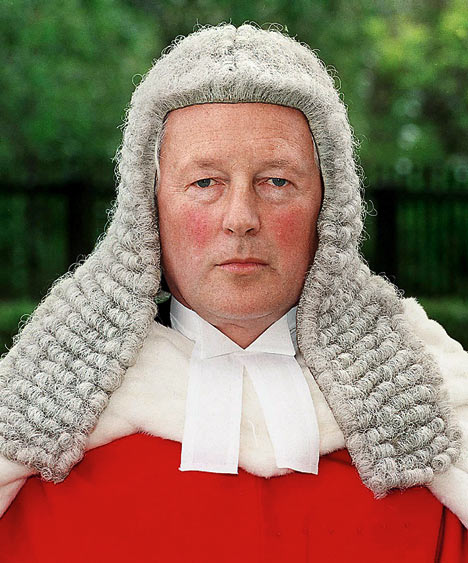
Daily Mail editor lambasts Moseley judge, and Moseley responds

For once the IPKat finds himself in the rather strange position of agreeing with Max Moseley. Mr Moseley (who was exposed by the News of the World as enjoying the attentions of a number of German-speaking 'ladies of the night') has spoken out in the Guardian against Paul Dacre's comments regarding privacy. Mr Dacre, the editor of the Daily Mail, gave the opening speech at the Society of Editors' conference. The speech comments on the fallout after the News of the World lost a privacy action, brought by Mr Moseley this summer (reported by the IPKat here) after exposing Mr Moseley's night-time activities and posting a video of one of the events on its website. Mr Dacre accused the judge in that case, Mr Justice Eady, of introducing a privacy law by the backdoor. He began:

But there is one remaining threat to press freedom that I suspect may prove far more dangerous to our industry than all the issues I have just discussed.

'Put to one side the United Nations’ recent attack on Britain’s disgracefully repressive libel laws that have made London the libel capital of the world – something that should be a bitter source of shame for our judicial system.

Concentrate instead on how inexorably, and insidiously, the British Press is having a privacy law imposed on it, which – apart from allowing the corrupt and the crooked to sleep easily in their beds – is, I would argue, undermining the ability of mass-circulation newspapers to sell newspapers in an ever more difficult market.

This law is not coming from Parliament – no, that would smack of democracy – but from the arrogant and amoral judgements – words I use very deliberately – of one man.

I am referring, of course, to Justice David Eady who has, again and again, under the privacy clause of the Human Rights Act, found against newspapers and their age-old freedom to expose the moral shortcomings of those in high places.'
Then, after discussing Moseley's case, and another case:

'Now most people would consider such activities to be perverted, depraved, the very abrogation of civilised behaviour of which the law is supposed to be the safeguard. Not Justice Eady. To him such behaviour was merely “unconventional”.

...

But what is most worrying about Justice Eady’s decisions is that he is ruling that - when it comes to morality - the law in Britain is now effectively neutral, which is why I accuse him, in his judgments, of being “amoral”.

...

What the judge loftily calls the “new rights-based jurisprudence” of the Human Rights Act seems to be ruling out any such thing as public standards of morality and decency, and the right of newspapers to report on digressions from those standards.

But most worrying is that when it comes to suppressing media freedom, the good Justice Eady is seemingly ubiquitous....

[Dacre then lists the cases in which Mr Justice Eady has sat]

But surely the greatest scandal is that while London boasts scores of eminent judges, one man is given a virtual monopoly of all cases against the media enabling him to bring in a privacy law by the back door.

English Common Law is the collective wisdom of many different judges over the ages. The freedom of the press, I would argue, is far too important to be left to the somewhat desiccated values of a single judge who clearly has an animus against the popular press and the right of people to freedom of expression. I personally would rather have never heard of Max Mosley and the squalid purgatory he inhabits. It is the others I care about: the crooks, the liars, the cheats, the rich and the corrupt sheltering behind a law of privacy being created by an unaccountable judge.

If Gordon Brown wanted to force a privacy law, he would have to set out a bill, arguing his case in both Houses of Parliament, withstand public scrutiny and win a series of votes. Now, thanks to the wretched Human Rights Act, one Judge with a subjective and highly relativist moral sense can do the same with a stroke of his pen.

All this has huge implications for newspapers and, I would argue, for society. Since time immemorial public shaming has been a vital element in defending the parameters of what are considered acceptable standards of social behaviour, helping ensure that citizens – rich and poor – adhere to them for the good of the greater community. For hundreds of years, the press has played a role in that process. It has the freedom to identify those who have offended public standards of decency – the very standards its readers believe in – and hold the transgressors up to public condemnation. If their readers don’t agree with the defence of such values, they would not buy those papers in such huge numbers.

Put another way, if mass-circulation newspapers, which, of course, also devote considerable space to reporting and analysis of public affairs, don’t have the freedom to write about scandal, I doubt whether they will retain their mass circulations with the obvious worrying implications for the democratic process.

Now some revile a moralising media. Others, such as myself, believe it is the duty of the media to take an ethical stand. Either way, it is a choice but Justice Eady – with his awesome powers – has taken away our freedom of expression to make that choice
.

The IPKat finds Dacre's speech problematic for a number reasons. To suggest that a judge has an agenda needs to be proven with more rigour than demonstrating that he has delivered a number of consistent judgments - if a judge is applying the law, one would hope for consistency. Who, out of interest, does Dacre suggest is granting Mr Justice Eady this 'virtual monopoly'? Mr Dacre also appears to have not quite grasped the concept of the separation of powers. Yes, judges are unelected, but that's the whole point. He calls the Human Rights Act 'wreteched'. That reduces the importance of an Act which enshrines (or at least adumbrates) fundamental values to a spat between editors of newspapers who want to break 'scandals' and those nasty conservative judges who are spoiling all the fun (and ruining the circulation figures). He accuses the law of being 'amoral', but surely the decision to put privacy and family life over free speech in some cases is a moral one, even if it's one he disagrees with. More fundamentally, judges applying the law, and perhaps particularly IP law, generally doesn't moralise (although there's clearly a moral judgment by Parliament in deciding what the law should be in the first place) or look to closely at the 'quality' of what they're protecting - a consequence of the fact that they're there to apply the law, not to make it up as they go along - make your mind up Mr Dacre; either you want judges to defer to the will of Parliament or you don't - you can't have it both ways. The full text of the speech is available here.

Friday, 31 October 2008

Companies object to use of trade marks in films

The IPKat read with bemusement a piece in today's Times describing how Mercedez Benz and the makers of a popular unnamed fizzy drink 'meant to unite the world' insisted that their trade marks be removed from scenes in the film Slumdog Millionaire. The film, the latest by British director Danny Boyle (who sounded off about the issue at the film's premier last night), tells the story of a boy from Bombay's slums who reaches the final of the Indian version of Who Wants to be a Millionaire. The companies are alleged to have thought that their brands would be sullied in shown in the setting of the slums. The film makers were forced to spend thousands of pounds blanking out the logos in scenes were the stars were shown drinking fizzy drinks on a rubbish dump and where a Mercedez car, driven by a gangster, was shown in the slum. According to Boyle:

“We wanted to use a Mercedes because . . . this guy, this gangster would drive a Mercedes . . . but if you use Mercedes then clearly you have to get permission, and we asked for their permission and they refused it.”

Could Boyle have just gone ahead and used the trade marks, the IPKat wonders? The use might lead to unsavoury associations, bringing with it a risk of tarnishment, but is it trade mark use, and is trade mark use even needed? (We've had lots of cases about this, but the answer still isn't clear, and perhaps the answer is different for Art.5(2) anyway). This underlines the accute need for clear guidance from the ECJ on the issue for once and for all. Life would be rather difficult if trade mark owners can use their marks to stop real products being shown in films, or even just in films which are not to their liking. Actually, the outcome in this situation could have been worse - at least the companies don't seem to have argued that their product shapes are trade marks, the use of which they can control. Merpel notes with a degree of regret that it wasn't the association with a gangster that annoyed Mercedez, but rather the association with a slum.

Friday, 24 October 2008

DoJ bans biker trade mark


The IPKat has learned from the Associated Press that the US Department of Justice has effectively seized control of the trade mark of the Mongols motorcycle gang, a picture of a Mongolian warrior wearing sunglasses. The gang appears to have been engaged in violent crime, and at the same time as the injunction banning the use of the trade mark, 79 gang members were indicted. Although the injunction banning the logo originally cracked down on distribution or sale of the logo, it now states that gang members "shall surrender for seizure all products, clothing, vehicles, motorcycles ... or other materials bearing the Mongols trademark, upon presentation of a copy of this order."

The Office of the US Attorney has said that it is drafting a protocol for such seizures, but others have cricised the moves as interfering with free speech.

The IPKat is relatively sanguine about this. He agrees that free speech is a serious consideration where a trade mark offends others. However, this mark seems more than offensive – it seems like it could incite wearers and others to commit violence. Surely this outweighs free speech? The Kat also notes that such moves might be unknown in the US, but in the UK, wearing clothing bearing the insignia of a banned group can result in an offence against anti-terrorist legislation.

Monday, 16 June 2008

Free speech, but nothing to say?

The IPKat has today received a copy of the ruling last Friday of Sonia Proudman QC, sitting as a Deputy Judge of the Chancery Division, England and Wales, in Pankajkumar Patel v Allos Therapeutics Inc -- a dispute in which human rights and trade mark collide quite dramatically.

Allos, an international biopharmaceutical company, owned US trade marks for the words 'Allos' and 'Allostherapeutics, Inc'. Unsurprisingly Allos operated the allostherapeutics.com domain name. Patel, a horticulturalist, did not trade in the pharma sector himself. However, he developed the habit of registering the names of companies -- including Allos -- as domain names. Unlike some grubby souls who only do it for the nuisance value and in the hope that they will be bought off for a juicy sum of money, Patel had a higher purpose. This was to wage ideological warfare against what he perceived to be the evils of the pharmaceutical industry, which he sought to expose. Patel's sites were acquired in the hope of directing internet users searching for the (evil) company in question to a website in the name of the company, in the form "trademark.tld", on which the company's logo was displayed. After he had a full view of the home page, the internet user would then be treated to a disclaimer or would come to realise that the site was unconnected to the target company.

In the case of Allos, the disputing parties had already agreed to an ICANN Uniform Dispute Resolution Procedure (UDRP), in which the panel upheld Allos's complaint and ordered that the allos.com and allostherapeutics.com domain names be transferred to Allos. Now Patel went to court and sought to have the UDRP process set aside on an unspecified ground under the Human Rights Act 1998. According to Patel, the panel's decision infringed his right to freedom of expression under Article 8 of the European Convention on Human Rights. Patel also alleged defamation, malicious falsehood and wrongful threats to sue for trade mark infringement. Allos, unimpressed by these lofty claims, applied for (i) the claims to be struck out on the ground that it disclosed no reasonable grounds of action or (ii) summary judgment on the basis that Patel had no real prospect of succeeding and there was no other compelling reason why the matter should go to trial.

Sonia Proudman QC granted Allos's application. She observed that freedom of expression was not an unqualified right: it had to be balanced against the rights of others, such as the rights of a minority not to suffer abuse or -- in this case -- the rights of a trade mark owner freely to enjoy its own rights and property. There was no way Patel could succeed: he used a domain name without offering any indication that it was a protest site; the site featured Allos's own trade mark. It was hardly free speech to use a domain name and trade marks that internet users would (and were intended to) associate with Allos in order to trick them. Nor wa there any active criticism, or link to any.

The IPKat says, oh dear, here's another litigant appearing in person who really had no chance at all. It's not as if he had taken the trouble to exercise his freedom of expression by saying something about Allos. This is not so much a plea for freedom of expression as a plea to be able to retain the media of expression until such time as something expressable occurs to him. Merpel says, the judge struck the right note when she said:
"He cannot accept that he is the aggressor, not the victim. He is not debarred from making legitimate criticisms of pharmaceutical companies nor from setting up proper criticism websites from which he and others might do so. Instead, he had chosen to usurp names and logos contrary to the UDRP policy".
Col d'Allos here
Val d'Allos here

Followers