Search

Showing posts with label SPCs. Show all posts

Friday, 26 August 2011

BGH: does an explanation make an invention?

It is well established in patent law that one can patent an invention even without understanding why it works the way it works. If I happen to be the first to discover that compound X cures cancer, I can get a patent on X for the treatment of cancer (provided the discovery wasn't obvious to the person skilled in the art), even when I have no clue whatsoever why X cures cancer.


So well, so good. As they say in the media business, "dog bites man is no news, man bites dog is news". The German Bundesgerichtshof (BGH) recently had the opportunity to consider the above tenet of patent law in reverse, so to speak. What if it is known that compound X is effective in the treatment of illness Y, but unknown why it works: can you get a patent on X for the treatment of Y if you are the first to find out how X works?


Defendant Merz & Co is the owner of the (expired) EP 392 059 B1 with a priority date of 14 April 1989. In 2006, Merz received a supplementary protection certificate (SPC) for "memantine, and its pharmaceutically compatible salts, namely memantinehydrochloride" for Germany based on EP 392 059 (given the CJEU's judgment in case C‑195/09 Synthon BV v Merz Pharma GmbH & Co. KGaA, this being a reference for a preliminary ruling from the Patents Court, England and Wales, the SPC is invalid anyway, but that is not the issue here). Two unnamed plaintiffs sought a declaration of nullity of Merz's SPC based on the nullity of the base patent. Both the Bundespatentgericht as well as the BGH sided with the plaintiffs (BGH, X ZR 68/08 of 9 June 2011).


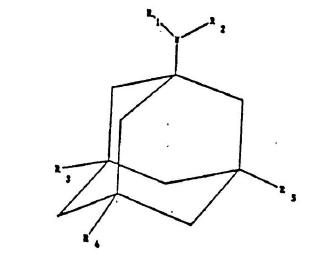
Merz restricted its patent, in essence, to "use of 1-amino-3,5-dimethyl-adamantane and its pharmaceutically compatible salts for the manufacture of a medicament for treatment of damaged brain cells after cerebral ischemia after morbus Alzheimer". The plaintiffs argued that the use of adamantane for the treatment of the family of symptoms to which Alzheimer belongs had been known at the priority date of the base patent. Merz defended itself by arguing that while the use may have been known, the mechanism how adamantine worked was unknown before the priority date and disclosed in the base patent for the first time.


The base patent, in the words of the BGH, disclosed the scientific foundation for the use of memantine in the treatment of Alzheimer and allowed a "better justifiable choice of memantine" ("besser verantwortbare Indikation der Memantingabe", para. 43). This, however, does not amount to a technical teaching, it is only a discovery of a biological mechanism that is not patentable under art. 52(2)(a) EPC (para. 44). The base patent neither teaches a different dosage regime nor gives any other specific directions for using memantine in the treatment of Alzheimer that had not been known in the prior art. The "commendable" scientific explanation offered by Merz is a medical and pharmalogical advance but not patentable. The SPC is therefore invalid because the base patent is invalid.

Friday, 17 September 2010

More on that Medeva CJEU Reference

The IPKat, and his esoteric companion the SPC Blog, have written previously (here, here and here) about the reference made earlier this year to the EU Court of Justice regarding Articles 3(a) and 3(b) of the SPC Regulation.  The story has now been further complicated by another case at the High Court of England and Wales (Georgetown University et al v The Comptroller-General of the Patent Office) involving an appeal from a decision of the Comptroller last December (BL O/401/09) regarding 8 SPC applications, all of which were refused.

The High Court Order for Reference to the Court of Justice, a copy of which has been uploaded to the IPKat's Google Groups server here, refers to the decision of the English Court of Appeal in Medeva's SPC Application [2010] EWCA Civ 700, in which various questions were referred to the CJEU.  One of these questions related to whether an SPC could be granted for a single active ingredient or a combination of active ingredients where a basic patent in force protected the ingredient(s) within the meaning of Article 3(a) and a product containing the ingredient(s) was the subject of a valid first marketing authorisation.

In brief, the UK-IPO's position is that, if the owner of a patent for an active ingredient A is entitled to rely for its SPC not on the marketing authorisation for A but for A+B, then this will extend the monopoly under the patent for reasons which do not reflect the purpose of the Regulation.  The parties, of course, argue otherwise, contending that it would be anomalous for the SPC regime to discriminate against vaccines, which are often first authorised only as combinations and not singly, with the result that new vaccines would not be able to obtain adequate protection.

To try to resolve this issue, the High Court has agreed to refer the following question to the CJ regarding Article 3(b) in the Georgetown case, and suggested that this case could be consolidated with Medeva given that the question is the same as the Article 3(b) question in Medeva.
Does the SPC Regulation and, in particular, Article 3(b), permit the grant of a Supplementary Protection Certificate for a single active ingredient or combination of active ingredients where:
(a) a basic patent in force protects the single active ingredient or combination of active ingredients within the meaning of Article 3(a) of the SPC Regulation; and
(b) a medicinal product containing the single active ingredient or combination of active ingredients together with one or more active ingredients is the subject of a valid authorisation granted in accordance with Directive 2001/83/EC or 2001/82/EC which is the first marketing authorisation that places the single active ingredient or combination of active ingredients on the market?
The IPKat, who is getting a little confused by all this, looks forward to seeing what the CJEU have to say on the subject and hopes that some clarity will come out of it, one way or the other.

Friday, 25 June 2010

Whooping for joy! Medeva's SPC applications book a trip to Luxembourg

Supplementary protection certificates (SPCs) for pharmaceutical patents don't get much column space on this weblog, mainly because it is a reputedly nerdish subject that only SPC addicts are interested in and, more importantly, because there is already a perfectly good weblog -- The SPC Blog -- to carry the latest developments in this undeniably recondite corner of IP. However, Medeva BV v Comptroller General of Patents [2010] EWCA Civ 700, an order of the Court of Appeal for England and Wales earlier this week, has had so many of the IPKat's readers jumping up and down with excitement that he really felt he should give it a mention.

In short, on 20 April 1990 [yes, it was a World Cup year -- and Germany beat England on penalties ...] Medeva applied for a patent for a method of making acellular vaccine compositions against whooping cough by combining two antigens, pertactin (69kDa protein) and filamentous haemagglutinin (FHA). This happy combination produced so synergistic an effect such that a third antigen, pertussis toxin (LPF) was not required. This patent expired in April 2010. One year ahead of expiry, Medeva filed five applications for SPCs. Three of these related to vaccines against whooping cough, diphtheria, tetanus, meningitis and polio; the other two covered just four, leaving out the vaccine against meningitis.

The hearing officer rejected all five applications. In the case of four, he concluded that the active ingredients included vaccines against diseases other than whooping cough, which were not protected by the original patent. In the case of the fifth, though the active ingredients were limited to those protected by Medeva's patent, the market authorisation covered a combination vaccine which included vaccines against the other four diseases. To put it another way, in the case of all five there was a mismatch between the active ingredients protected by the patent and the active ingredients in the vaccine or medicinal product for which the relevant market authorisations had been given.

Medeva appealed, arguing that the hearing officer had misconstrued the meaning of the words "product protected by a basic patent" in Article 3(a) of Regulation 469/2009 on SPCs for medicinal products. That term, said Medeva, covered any product which could be subject to successful proceedings for infringement of the patent ("the infringement test"). The appeal was dismissed by the Patents Court (see The SPC Blog here) and Medeva appealed further to the Court of Appeal.

The Court of Appeal, rightly sizing up the Regulation and identifying it as a can of worms, has now prudently referred a number of questions to the Court of Justice of the European Union, Luxembourg, for a preliminary ruling
On Article 3(a)

1. Regulation 469/2009 ... recognises amongst the other purposes identified in the recitals, the need for the grant of an SPC by each of the Member States of the Community to holders of national or European patents to be under the same conditions, as indicated in recitals 7 and 8. In the absence of Community harmonisation of patent law, what is meant in Article 3(a) of the Regulation by “the product is protected by a basic patent in force” and what are the criteria for deciding this?

2. In a case like the present one involving a medicinal product comprising more than one active ingredient, are there further or different criteria for determining whether or not “the product is protected by a basic patent” according to Article 3(a) of the Regulation and, if so, what are those further or different criteria?

3. In a case like the present one involving a multi-disease vaccine, are there further or different criteria for determining whether or not “the product is protected by a basic patent” according to Article 3(a) of the Regulation and, if so, what are those further or different criteria?

4. For the purposes of Article 3(a), is a multi-disease vaccine comprising multiple antigens “protected by a basic patent” if one antigen of the vaccine is “protected by the basic patent in force”?
5. For the purposes of Article 3(a), is a multi-disease vaccine comprising multiple antigens “protected by a basic patent” if all antigens directed against one disease are “protected by the basic patent in force”?

On Article 3(b)

6. Does the SPC Regulation and, in particular, Article 3(b), permit the grant of a Supplementary Protection Certificate for a single active ingredient or combination of active ingredients where:

(a) a basic patent in force protects the single active ingredient or combination of active ingredients within the meaning of Article 3(a) of the SPC Regulation; and

(b) a medicinal product containing the single active ingredient or combination of active ingredients together with one or more other active ingredients is the subject of a valid authorisation granted in accordance with Directive 2001/83/EC or 2001/82/EC which is the first marketing authorization that places the single active ingredient or combination of active ingredients on the market?
The sealed order of the Court of Appeal, kindly furnished to this Kat by Tom Mitcheson (3 New Square) and the effervescent Hayley Hill (Rouse), can be read here.

Whooping cough here
Whooping cough for cats here

Sunday, 16 May 2010

Pharma Nightmare: Falling off the Patent Cliff

A press release, dramatically entitled "Pharma Industry Enters Critical Phase as Patent Cliff Looms Large, Hastening Consolidation", paints a bleak picture of confidence in the short-term future of the proprietary pharma sector. The headline news is that
• More than 8 in 10 (82 per cent) of those working in the drugs industry believe big pharma will be unable to innovate sufficiently from within to replace blockbuster drugs going off-patent;
• 97 per cent expect that patent life extensions will continue to grow in importance as companies seek to squeeze out revenue streams as blockbusters come up against the patent cliff;
• Almost 7 in 10 (67 per cent) predict substantial acquisition activity within the next two years.
All this is according to the latest annual life sciences research from UK-based international IP practice Marks & Clerk. Its findings, based on a survey of 381 executives [how the Kat dislikes this word: can we have a clue concerning job descriptions please?] across the pharmaceutical and biotechnology sectors, shows that big pharma is becoming increasingly reliant on patent term extensions to safeguard essential blockbuster revenue ahead of a likely ‘make-or-break’ round of company acquisitions. Not surprisingly, there is some gloom at the challenge facing originator pharmaceutical companies, since large numbers of their blockbuster drugs are set to come off-patent between now and 2014.

The IPKat's not sure that originator pharma companies will be more interested in securing supplementary protection certificates and paediatric extensions than they have been in the past, since they have always been highly interested in them -- but he agrees that they will be more dependent on the income stream they provide. However, the more valuable those income streams are for their owners, the greater is the gain to be secured by challenging their validity per se as well as seeking to undermine the patents on which they are based, so this is probably good news for pharma patent litigators [For further reading and current news on SPCs, see The SPC Blog].

Patent Cliff here
Copyright Cliff here
Trade mark cliff here

Thursday, 2 April 2009

Synthon v Merz - More SPC Confusion

The IPKat has been passed an early copy of Mr Justice Floyd's judgment from earlier today in the case of Synthon v Merz, which relates to the esoteric outer reaches of how European Community law on Supplementary Protection Certificates (SPCs) should be interpreted. The final version is now available from BAILII here.

SPCs are intended to provide a limited extension of patent protection for medicinal products in order to partly compensate for delays in obtaining marketing authorisations.  SPCs can last for a maximum of 5 years after expiry of a'basic patent' covering the product, and can extend to no more than 15 years from the first marketing authorisation in a member state.  

In this case, the question related to what should happen when the basic patent in question relates to a second medical use of a known product.  Merz had obtained a patent relating to a second medical use for memantine, and was able to place the product on the market without requiring a further authorisation, partly because the same product had been on the market since 1976.  Merz did, however, obtain a marketing authorisation within the definition provided in the SPC regulation in 2002, and argued that they should be allowed an extra five years on their patent on this basis.  Synthon argued that earlier marketing authorisations should count instead, which would make any SPC granted have a zero term.  

Given that various issues relating to the issue of marketing authorisations had been considered in cases before other national courts, Floyd J thought that it was appropriate that some questions should be put to the ECJ in order to resolve the apparent discrepancies.  These questions are as follows:
1. For the purposes of Articles 13 and 19 of Council Regulation (EC) No 1768/92, is an authorisation a “first authorization to place … on the market in the Community”, if it is granted in pursuance of a national law which is compliant with Council Directive 65/65/EEC, or is it necessary that it be established in addition that, in granting the authorisation in question, the national authority complied with the administrative procedure laid down in that Directive?

2. For the purposes of Articles 13 and 19 of Council Regulation (EC) No 1768/92, does the expression “first authorization to place … on the market in the Community”, include authorisations which are permitted by national law to co-exist with an authorisation regime which complies with Council Directive 65/65/EEC?

3. Is a product which is authorised to be placed on the market for the first time in the EEC without going through the administrative procedure laid down in Council Directive 65/65/EEC within the scope of Council Regulation (EC) 1768/92 as defined by Article 2?

4. If not, is an SPC granted in respect of such a product invalid?
Floyd J leaned towards Synthon's arguments, which would result in Merz being unable to obtain their SPC.  The IPKat, who does not practice in this area (and is not therefore swayed by any financial inducements), would also tend to lean in the same direction, and suspects that the ECJ will agree.  He also, however, finds it a bit odd that a second medical use patent could even be considered to be the 'basic patent' for the product in question, but further suspects that some of his more knowledgeable readers will be able to enlighten him. 

Friday, 17 October 2008

Levofloxacin SPC valid

Not every day does a case involving supplementary protection certificates come along. For the unitiated, supplementary protection certificates (or "SPCs" as they are lovingly called by their ardent admirers) are means by which patents for many pharmaceutical and plant protection patents can be extended for up to five years, to make up for the fact that so much marketing time is lost to patent owners when products made under those patents are rigorously tested for efficacy and side effects.

Right: SPC -- meet the Samurai Pizza Cats

For this reason SPCs aren't just issued willy-nilly -- they're not granted unless they are based on an actual product covered by the patent and for which a market authorisation has been granted. The Patents Court for England and Wales had an SPC case this week: Generics (UK) Ltd v Daiichi Pharmaceutical Co Ltd and another [2008] EWHC 2413 (Pat), a ruling on Wednesday by Mr Justice Kitchin.

Daiichi owned a patent and a supplementary protection certificate for the (-) enantiomer of ofloxacin, a racemic compound. Ofloxacin belonged to the quinolone class of anti-microbial agents and its (-) enantiomer of ofloxacin was called levofloxacin. The patent itself, which claimed priority from three Japanese filings, was filed on 20 June 1986 and granted on 27 January 1993. UK marketing authorisations were granted in respect of levofloxacin on 6 June 1997.

On 23 October 1997 Daiichi applied for the SPC, identifying (i) the basic patent, (ii) levofloxacin as the product and (iii) the UK marketing authorisations in respect of levofloxacin as the first authorisations to place the product on the market. The SPC was granted on 13 July 1998. After the patent expired on 20 June 2006, the SPC came into force and was due to expire on 19 June 2011. Generics then applied for a declaration of invalidity of (or rectification of the register in respect of) the SPC and a declaration that certain claims of the patent were invalid.

According to Generics the SPC was invalid under Article 15 of Council Regulation 1768/92 on the creation of SPCs for medicinal products because the patent either should have been revoked or should have been limited so that levofloxacin would no longer be covered by its claims; also, Generics felt that Daiichi had already got its extension when it got an SPC for ofloxacin.

Kitchin J refused Generics’ application. In his view

• Since the various assaults on the now-expired patent would all have failed, the challenge to the SPC based upon Article 15 failed too.
• the earlier marketing authorisation for ofloxacin did not also cover levofloxacin.
The IPKat is aware of the immense value of the post-patent market for pharma products and recognizes how every day can yield precious rewards for the patent/SPC holder before its temporal monopoly is lost. That, he says, is why battles over SPCs, though not common, are so keenly fought. Adds Merpel, there are three interests to balance here: that of the investor in original products, that of the other manufacturers in the market and that of consumers. In general the system seems to achieve that balance in that all players are equally aggrieved by it. Originators feel that their protection remains inadequate in relation to the expense and risk of developing new products; competitors feel cheated by monopolies that stretch out beyond the natural life of the patent and consumers consider that long-term protection forces prices up.

What SPC really stands for .... here
For real enthusiasts of Supplementary Protection Certificates, here's The SPC Blog

Wednesday, 23 July 2008

New blog on the block ... for SPCs

"Rising from the ashes of the expired patent" might seem a trifle dramatic for a weblog theme, but there's a new blog on the block and it's aimed at a subject which is as important as it is neglected -- the extension of patents, particularly through the mechanism of supplementary protection certificates (SPCs) which is favoured within the European Union.

Right: the phoenix -- an apt theme for SPCs?

Piloted by IPKat team member Jeremy together with his friends Rob Stephen and Catherine Katzka, this niche blog is
"dedicated to the issues that arise when supplementary protection certificates (SPCs) extend patents beyond their normal life -- and to the respective positions of patent owners, investors, competitors and consumers. The blog also addresses wider issues that may be of interest or use to those involved in the extension of patent rights".
Jeremy, Rob and Catherine hope to put together a handy bundle of source materials and further reading on SPCs and, if sufficient interest emerges, to help build a little community of people who are concerned about how patent extension works, in theory and in practice, and who want to share their thoughts with others.

You're welcome to visit The SPC Blog here.

Followers