Search

Monday, 19 September 2011

Unpaid costs revisited

Some folk take extraordinary measures to avoid
having to pay costs in OHIM oppositions ....
(photo: Gillo, who belongs to Eleonora Rosati)
With apologies for the delay, this backlogged Kat has finally managed to revert to a subject which continues to be of concern to many readers and which was also discussed in one of the workshop sessions at last week's MARQUES conference -- what can or should be done about unpaid costs orders? While this issue has been particularly annoying in the context of unsuccessful oppositions to Community trade mark applications, it is one that crops up in lots of other little corners of IP litigation too: a costs order is made and, often being considerably less than the actual costs incurred by the winning party, it is too small for its enforcement to be cost-effective -- which tempts the losing party to ignore it.

The Max Planck Institute's Study on the Overall Functioning of the European Trade Mark System, published earlier this year and noted by the IPKat here, addressed the unpaid costs order issue. The Study recognised the existence of the problem but lacked evidence as to its scale and addressed it in terms of facilitating enforcement in national courts as follows:
"Enforcing cost awards 
4.181 There are frequent complaints about the difficulties of enforcing cost awards against parties not voluntarily paying any costs imposed against them. Even though cost decisions constitute enforceable titles, the efforts necessary for recovering money awards from uncooperative debtors are rarely warranted in view of the expense involved and the low amount of costs actually awarded. 
4.182 No reliable statistics exist showing the number of cases where debtors do not pay the costs awarded against them. Without such evidence it would appear difficult to propose solutions which would unsettle the current system. For example, it would not appear appropriate to raise the amount of costs that can be awarded merely to make an eventual enforcement procedure more realistic. 
4.183 It seems possible nevertheless to improve the current situation without changing the amounts. 
4.184 For example, not all Member States appear to have designated the competent authority for making the enforcement order, as provided for in Article 86 (2) CTMR.  ...  According to Article 86 (2) CTMR, the designated authority must be communicated to the Court of Justice and to the Office. ... [I]t would seem appropriate that the Member States must designate a single authority. Furthermore, all the details of communicating with this authority should be made available. 
4.185 Obtaining an enforcement order in a Member State will normally require a translation of the decision fixing the costs into the language of the respective Member State. Matters could be facilitated if the Office would issue on request a document, in any of the languages required, evidencing the amount of the fixed costs. The Office could have a standard document in all languages which would be completed by adding the fixed amount. The situation would improve if obtaining the order of enforcement were uncomplicated and unbureaucratic, and could actually be done directly by the creditor or his representative. 
4.186 Outside of the legislation, OHIM should discuss with the NGOs represented before it, and national authorities should discuss with organizations in their respective countries, measures to facilitate the recovery of cost awards. 
Proposals 
4.187 It is proposed to leave Article 85 CTMR and Rule 94 CTMIR unchanged. 
4.188 Article 86 (2) CTMR should be amended to require Member States to designate a single competent authority and communicate to the Court of Justice, to the Commission and to the Office all details of communication with that authority. 
4.189 The Office should develop a standard form in all languages to be issued on demand showing the amount to be enforced".
These proposals make it easier to enforce costs, but do not address the cost-effectiveness of doing so.

Moving to the results of the IPKat's recent poll look, they look like this:

What's the best way to solve the IP costs non-payment problem?


Require security for costs
  95 (45%)
Make costs orders larger so that it's worth suing to recover them   
  9 (4%)
Monthly escalation of unpaid costs
  33 (15%)
Use name-and-shame websites
  4 (1%)
Render their own IP unenforceable till they pay
  46 (22%)
Forgive them, for they know not what they do
  20 (9%)

Security costs was by far the most attractive of the listed options, since the losing party can't walk away from its obligation. While nearly a quarter of those polled called for the opposer's IP to be rendered unenforceable till costs were paid, the practical problems which this would raise would be both undesirable and, in some cases, nearly insurmountable. Monthly escalation of unpaid costs was quite popular, but naming and shaming was not since, in the UK, where it is already in use, too many people seem quite happy to be named and shamed so long as they don't have to pay their costs orders.

An option which was not on the poll but which attracted the write-in of some notable practitioners, was that of simply scrapping costs orders entirely. Typical of this view is the position expressed by Richard Gallafent (Gallafents):
"I have not voted and will not be voting in the whole in connection with collecting unpaid costs in IP opposition proceedings because it does not provide an option of simply vacating costs awards in such proceedings across the board.

I personally favour this, because I take the view that if you are serious about intellectual property, either from seriously wanting to acquire some, or seriously wanting to stop somebody else doing so, then you ought to accept that either activity is going to cost you money. For the vast majority of cases, that is money which you can choose to spend or not. Particularly in the area of trade marks, registration is not mandatory but, of course, nor is it in connection with patents or indeed (in those rare cases where there may be opposition proceedings available) designs.

I am, of course, aware that, as far as domestic UK proceedings goes, there is a long tradition of a contribution to the winning party’s costs being made by the losing party. It is always a contribution save in the most egregious cases, but I have yet to come across a case where defending or prosecuting an opposition did not cost both parties rather more than the contribution awarded. I would scrap them in any event. I am of the view that the cost of prosecuting or defending should be factored into decision-making by the parties concerned without the distorting factor of a possible recovery of part of them.

My suspicion is that the only change that can be made without major upheaval is in connection with proceedings before the Community Trade Marks & Designs Office, where the compromise position (I assume it was a compromise position in any event) which was reached at the end of the negotiations leading up to the final Regulation was that there would be what one might characterise as a “modest” award. It certainly is modest, and while there are certainly cases where it is paid, there are many where it is simply not paid, and, of course, the (irrecoverable) cost of trying to retrieve it would substantially exceed the award itself.

I would accordingly favour scrapping the costs rule as far as OHIM proceedings are concerned. It would relieve practitioners and, indeed, the Office of activity which, in my view, is essentially entirely pointless. And, of course, there has never been any ‘costs’ aspect in EPO opposition proceedings - which can involve quite serious sums of money and more than trade mark ones usually entail".
This Kat does not personally favour scrapping costs orders, since he thinks that this could have a seriously chilling effect on the steps a small or medium sized business might feel confident to defend its trade mark application against a well-resourced but malign opponent. The Max Planck proposals are desirable in any event, but more is needed. He hopes that a satisfactory solution will be found that that, when it is, we will not end up with a patchwork of anomalies in which unpaid costs orders are treated differently as between different IP rights or different proceedings regarding the same IP right.

Monday miscellany

Red Cross, not. The German Federal Government has honoured Alison Brimelow (Chair of the Intellectual Property Institute and former President of the European Patent Office) by awarding her the Commander’s Cross of the Order of Merit (Grosses Bundesverdienstkreuz). At the award ceremony Federal Minister of Justice Birgit Grundmann made particular mention of Alison's pioneer role as the first woman President of the EPO and her achievements in reforming and guiding the Office through a time of financial crisis, as well as her personal engagement in the life of her adopted city of Munich. The IPKat adds his own personal congratulations and is particularly pleased to see Alison get some recognition, following the rough time she had at the EPO. He notes that, having been awarded the status of Commander of the Order of the British Empire (CBEfrom the British government, she is now commanding both the Germans and the British. Merpel worries about the German cross itself, which is definitely red and unquestionably a cross: is there, perchance, a likelihood of confusion with another, certainly well-known cross of the same hue, she innocently speculates ...


Changing of the guard. From the IPKat's friend Margaret Llewelyn comes news that Bart Kiewiet (the first President of the Community Plant Variety Office) has stepped down, to be replaced by the CPVO's Head of Legal Affairs Martin Ekvad. Martin also has experience of life in private practice, with Linklaters in Brussels and Magnusson Wahlin Advokatbyrå in Stockholm. The Kat wishes both Bart and Martin all the best. Merpel is hoping for an improvement at CPVO, where her site search for catnip proved quite fruitless.


Nice work, if you can get it.  The IPKat let out a little growl not long ago about the fate of the 10th edition of the Nice Classification of goods and services for trade marks.  Gratifyingly, at last week's MARQUES conference in Baveno (reported extensively on the Class 46 weblog), Marcus Höpperger, Acting Director of the World Intellectual Property Organization's Trademarks, Industrial Designs Law Division, name-checked the IPKat and the concern of his readers and gave them the good news that the 10th edition will indeed be operative from 1 January 2012. Readers can enjoy a taste of the future by clicking here, while bearing in mind the fact that, until close of play in December 2011, it is the ninth edition which remains in force.


Good luck Gillian.  For the past 16 years Gillian Ellis has masterminded a succession of intellectual property conferences for CLT conferences, including this week's Handbags at Dawn IP in the Fashion Industry event.  Now she is leaving conference organising, in search of fresh adventures. The IPKat wishes her well in her new endeavours, recalling with pleasure and affection the many polished performers on today's IP stage who began their public speaking careers on one of Gillian's programmes.


A plague on both their houses? The IPKat's official Myriad-watcher Chris Torrero has informed him that the US Federal Circuit has issued an order that would look a bit sparse even as a Tweet: with just one word—“Denied”—the Circuit has dashed both parties’ requests for a rehearing by the three-judge panel that so controversially decided the case in the first place. According to the Genomics Law Report (here), the parties have 90 days to file a certiorari petition, asking for Supreme Court review.


Around the weblogs.  The Latin American intellectual property blog IP Tango has been extraordinarily lively of late, with over 30 bright and breezy IP posts -- split between the English and Spanish languages -- over the past fortnight.  In "Venezuela: a tormenting week" (here, with links to earlier posts), Patricia Covarrubia records the ups and downs of IP protection and activity in that remarkable country.  This week's tour by Kingsley Egbuonu of African countries without an official web presence for their industrial property and copyright offices takes Afro-IP to the Republic of the Congo (not to be confused with the Democratic Republic of the Congo).  The Pirate Party's Dirk Poot takes a critical but reasoned look at the recent decision of the European Union to go for copyright extension for sound recordings, here -- and does not like what he sees. Meanwhile, IP Draughts' Mark Anderson takes up the topic of professional rankings which Kat team member Neil raised last week, and Seattle Trademark Lawyer Michael Atkins explains how there is property in the word 'Realtor' here.


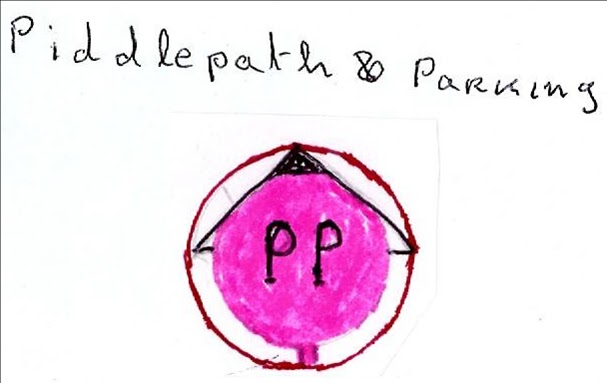
"We aim to please ..." At the opening session of last week's MARQUES Conference, Shane Smyth (FRKelly, Dublin) wowed the crowd with a remarkable application to register a trade mark in Ireland which, though emanating from an individual applicant -- one John Clooney of Rathaspick, Athy, Co. Laois -- must surely have been drafted  by a patent attorney.  The hand-drawn sign for which registration was sought consisted of the words "Piddlepath & Parking" together with a PP device.  The patent attorney? Who else would dream up a specification for Class 45 like this:
"A public service system for directing motorists from outside a town to a public convenience. Incorporating a sewage system and three or more short term parking spaces adjacent to the said public convenience". 

Friday, 16 September 2011

Professional Listings: When Less is More


We live in the golden age of professional rankings and listings. Let's be honest--we all relish being ranked high on the most well-known listings; should our ranking fall, we make great efforts to rectify that for the next ranking year. Professional rankings are not, however, merely personal matters. It has become de rigueur to include favourable listings on both one's general firm website as well as on one's own webpage. One prefers to be ranked by better-known rating agencies because, it is presumed, the goodwill in the name of the listing will redound to your benefit, the better to market yourself with.

This presumption was put the test earlier this week, however. The occasion was a visit to an overseas law firm for the purpose of making our mutual acquaintance. What is interesting is how I came to arrange such a meeting. The story goes like this. Several weeks before the trip, I received an email from the firm (I seem to be on its email distribution list), advising that three lawyers at the firm had been designated as leading female lawyers for a certain region in the U.S. (there is apparently such a listing).

Notice carefully--this was not a notice that 5 (or 10 or 15 or 50) of the firm's lawyers had been named by one of the high-profile list, but a listing that, on its face, was much less "prestigious". And yet, it was precisely this less "prestigious" designation that caught my attention, leading me to read more about one of the designees, whose IP practice is similar to mine, leading further to arrange to meet this lawyer and several of her IP colleagues.

During our meeting, I was upfront about how I had come to arrange the meeting, and my contact lawyer at the firm then made a fascinating observation: I was not the only person who had reached out to her by virtue of this email notice about her recent listing. In fact, it appears that she had never before received so many inquiries in response to a listing, despite the fact that she is also listed on all of the major professional listings in her IP area. As a marketing tool, therefore, it would seem that this more modest designation had greater marketing impact than public notification about other, more high-profile listings.

On the long flight home, this incident got me to thinking. What exactly is the marketing value of inclusion on professional listings? After all, I am not a marketing Luddite and I am certain that professional listings have value. But because of the meeting, I was forced to think more sharply about what these benefits are. A number of thoughts came to mind:

1. A well-regarded listing is valuable in providing an iprimatur, backed by its goodwill and reputation, about the collective status of a law firm. If a valuable trade mark/service mark provides search-cost benefits to the public, who come to rely on the mark, then the value of the professional listing at the collective level services as a sign of presumed quality of the law firm.

2. There is a similar, but not identical effect, regarding the ranking of individual lawyers. My instincts tell me that decisions about individual lawywers are less influenced by rankings than about the choice of a law firm more generally; after all, personal relations also play a large, perhaps decisive role. However, I assume that at the margin such rankings might also affect decisions at the more individual level.

3. Both (1) and (2) describe situations where a person seeks information about a firm and relies on the listing for validation or support. However, and this is based merely on anecdote, reliance on such listings for pro-active marketing and promotion appears to be of less value. There is a certain over-familiarity with the "club" of professional listings, the result of which is that when it seems that "everyone" is listed, the impact of any given listing is diminished.

4. Ironically, therefore, inclusion of a listing tht is unfamilar, and has a unique quality to it, will be more likely to attract my attention. What is working here is not the reputation and goodwill of the professional listing, but the drawing power of the contents themselves. Assuming that one actually reads such contents, there is a greater likelihood that they may have a positive marketing and promotion effect.

More on Luddites here.

Thursday, 15 September 2011

How much is a secret worth?

A jury in Virginia District Court has awarded damages of US$919 million for trade secret misappropriation against a South Korean company, Kolon Industries. Returning a verdict finding that Kolon illicitly made use of 149 such secrets, this works out at over $6 million per secret.

Kolon competes with market leader DuPont in the lucrative market for aramid fibers.  If that chemical name does not set your whiskers twitching, you might be familiar with the DuPont trademarks Kevlar and Nomex, which are the best known examples of aramids. These high-strength, lightweight materials are used most famously in bulletproof armour (Kevlar) and fireproof clothing (Nomex), but nowadays can be found in everything from racing canoes to the laces on football boots.  

(If Kevlar football laces are the answer, what on earth could the question have been, Merpel wonders? The days of jumpers for goalposts are long gone indeed.)

As reported by  Bloomberg, DuPont alleged in their trade secrets action that Kolon had hired former DuPont executives and engineers as consultants, and then conspired with them to steal DuPont's trade secrets relating to the manufacture of these fibers. The jury agreed.

A 'Nomex' hood - perfect for concealing your
features if you're planning to indulge in a spot
of economic espionage.
It seems DuPont became particularly suspicious when Kolon hired former DuPont engineer Michael Mitchell, who had previously been in charge of DuPont's marketing of Kevlar. Following a complaint to the FBI (who handle such cases under their economic espionage jurisdiction), Mr Mitchell's home was searched, and the Feds found proprietary DuPont information on his computer. Last year, Mitchell pleaded guilty to theft of trade secrets and obstruction of justice, resulting in an 18 month prison sentence and an undoubted strengthening of DuPont's case against Kolon.

Given the size of the award (which represents about a third of Kolon Industries' annual turnover, and a full four years worth of its operating profits), it is not surprising that Kolon plans to appeal.

Kolon, responding to the jury's verdict, denies that it sought or solicited any trade secrets from the ex-DuPont consultants it hired, or that it was aware that any information it received was in fact a trade secret. Kolon also claims that at least some of the information was in the public domain, presumably in the hope of at least whittling down the number of items regarded as secrets on appeal, leading to a corresponding reduction in damages.

The German Federal Patent Court and the changing principles of morality

Some surprising news - well, to this prudish Kat anyway - come from the German Federal Patent Court (Bundespatentgericht) which has decided that the trade mark "F*CKEN" (register entry shown to the left in prudishly small print) can be registered for beverages. The German word is similar to the English word so that I do not believe anyone will need a translation. The German Patent and Trademark Office (DPMA) had initially (and in this Kat's view rather not surprisingly) refused registration of the mark as being contrary to public policy or to accepted principles of morality.

On appeal, the Federal Patent Court was a lot more open-minded, shall we say. The judges held that due to the increasing liberalisation of the general public's views on conventions and principles of morality the mark "F*CKEN" did not affect the general public's moral sensitivities in a completely intolerable way - with the general public being the relevant consumers of beverages in this case. The judges would however draw a line and not accept trade marks for registration that were more than of mere bad taste but which contained an additional sexual meaning that was massively discriminatory. For example: gender specifically discriminatory and/or marks which affect human dignity or which could at least seriously be interpreted as having such a meaning

The word "F*CKEN" however was gender-neutral, the judges held, and as such not one-sidedly discriminatory. Furthermore, the word was widely used in everyday language and was no longer sexually provocative even though the word "F*CKEN" was part of "vulgar language" and not word of "good taste". Diligently conducting further research, the court also found 67 phonebook entries for name "F*cken" within Germany and stressed that the word could be found in dictionaries. In addition, the word "F*CKEN" was used in critically acclaimed film titles, TV programmes and book titles, such as "Shoppen & F*cken" and "F*ckende Fische" (see left). The judges also pointed out that the word was included in the title of a theatre play ("Mesalliance aber wir f*cken uns prächtig", in English: "Mesalliance but we are f*cking happily") written by the critically acclaimed author Werner Schwab and this play had been shown on German theatre stages. In light of this the DPMA's refusal had to be reversed.

A rather progressive court that clearly did all the background research… Merpel rather enjoyed reading the decision and will now do some research of her own, she is in particular interested in "F*ckende Fische", age restriction 12 years. She wonders for how long the DPMA's trade mark register will retain the same age restriction.

Case reference: 26 W (pat) 116/10 of 3 August 2011.

To read this decision in its entirety, please click here.

Wednesday, 14 September 2011

Audio Car

http://fc09.deviantart.net/fs27/i/2008/092/6/5/Car_Show_1__Soround_sound__by_Dragon_Furry.jpg 
As a young man in general, my hobby is cars. More precisely is the car modification. Yes, though I am not rich person, but I still want to spend my money to modify my car. I am not satisfied with the standarcondition by the car factory. I want to have a great different car than the standard car. In terms of car modification, many things that can be replaced. But because I very like and love music, so my main focus in the modification is the audio section. The first - all of which I replace is the speakers. This is main part to produce a sound.

After the audio and music over modified, then the next step that is also important is the installation DVD in my car. Yes, DVD drive is very important because when we are stuck in traffic jam, then we can watch the DVD. Many people asked me, where I can get these audio modification products with cheap price but the quality is good. I myself often buy these audio products in ShopWiki, because in addition to great products and low prices, the purchase process was very easy. We only ordered the product which we want, then we pay, and then just waiting for the products coming into our homes. Very easy right?

an influential person in the world


In a stunning result, the winner of the third annual TIME 100 poll and new owner of the title World's Most Influential Person is moot. The 21-year-old college student and founder of the online community 4chan.org, whose real name is Christopher Poole, received 16,794,368 votes and an average influence rating of 90 (out of a possible 100) to handily beat the likes of Barack Obama, Vladimir Putin and Oprah Winfrey. To put the magnitude of the upset in perspective, it's worth noting that everyone moot beat out actually has a job.
Since moot launched 4chan.org in 2003, the site has given birth to Internet memes as diverse as Lolcats and Rickrolling. 4chan averages 13 million page views a day and 5.6 million visitors a month; by some estimates it is the second largest bulletin board in the world.
See the world's most influential people in the 2009 TIME 100.
For proof of moot's influence on the Web, one need look no further than the TIME 100 poll results. While Filipino boxer Manny Pacquiao got a larger vote total (20,391,818), the runner-up for the title of World's Most Influential Person, Malaysian politician Anwar Ibrahim, received a mere 47 on the influence scale. Moot denies knowing about any concerted plan by his followers to influence the poll, though TIME.com's technical team did detect and extinguish several attempts to hack the vote. (See the full results here.)
Undoubtedly, many people will question moot's worthiness of the title World's Most Influential Person. TIME.com managing editor Josh Tyrangiel says moot is no less deserving than previous title holders like Nintendo video-game designer Shigeru Miyamoto (2007) and Korean pop star Rain (2006). "I would remind anyone who doubts the results that this is an Internet poll," he says. "Doubting the results is kind of the point."

Followers